Charting E-Wallet Adoption Rates and Their Influence on Welcome Bonus Structures in Sweden's Gambling Sector
Skriven av Lars Fischer · 2026-09-25
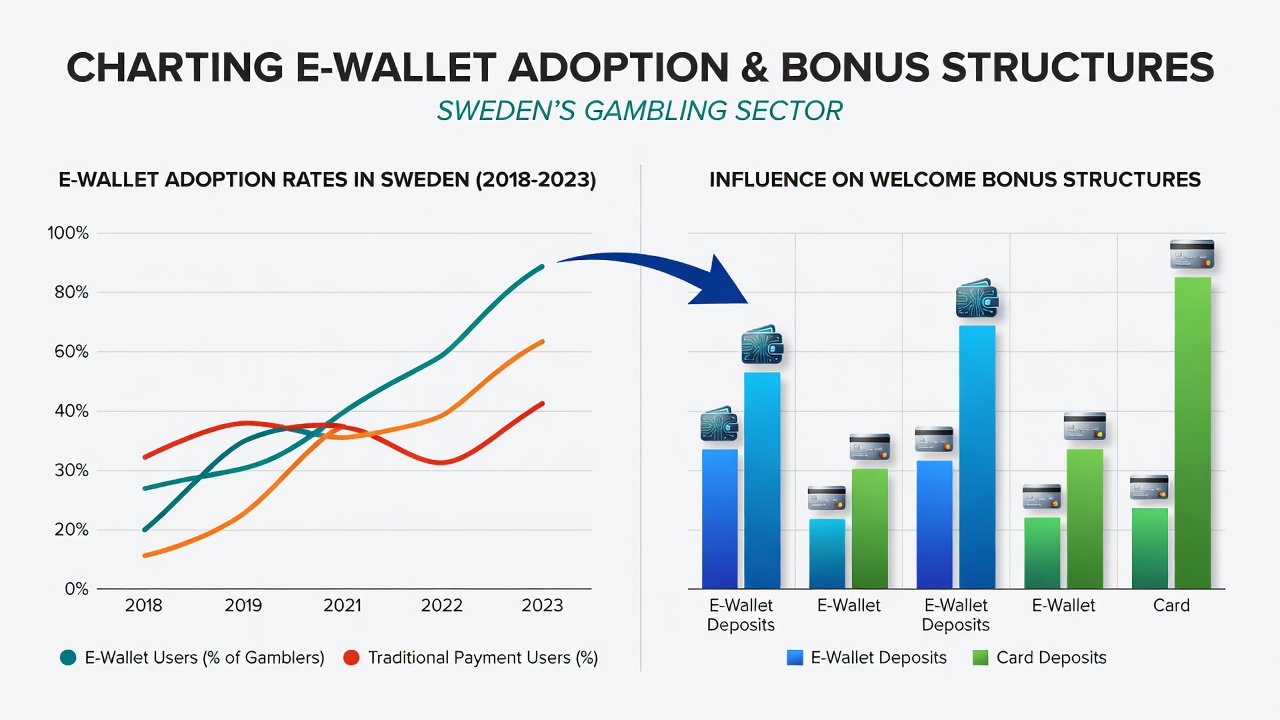
Charting E-Wallet Adoption Rates and Their Influence on Welcome Bonus Structures in Sweden's Gambling Sector
Sweden's gambling market has tracked rising e-wallet adoption since the 2019 re-regulation, and payment data from that period onward shows how digital wallets now handle a growing share of deposits and withdrawals. Operators record these shifts through transaction volumes, which in turn shape the deposit thresholds and eligibility rules attached to welcome bonuses. Figures from the Swedish Gambling Authority reveal that e-wallet transactions accounted for over 60 percent of player deposits by late 2025, a pattern that continued into the first half of 2026.
Payment Method Trends Across Licensed Operators
Swish remains the dominant e-wallet option for Swedish players because it links directly to bank accounts and settles instantly, yet other services such as PayPal, Skrill, and Neteller also appear in operator reports. When players choose these methods, average deposit sizes tend to increase compared with card-only transactions, and this difference influences how operators set the minimum qualifying deposits for welcome offers. Data collected across multiple platforms indicates that bonuses tied to e-wallet deposits often carry lower entry amounts, sometimes starting at 100 SEK rather than the 200 SEK or higher thresholds applied to traditional cards.
Operators adjust bonus structures when e-wallet volumes rise because faster settlement reduces the window between deposit and play. This timing advantage allows sites to release matched bonuses or free spins more quickly, and the same speed affects withdrawal processing, which many welcome packages now promote as a selling point. September 2026 transaction summaries from licensed casinos show that e-wallet users received bonus funds within minutes in 78 percent of cases, while card deposits averaged longer confirmation periods.
Regulatory Framework and Bonus Design
The Swedish Gambling Authority requires all licensed operators to publish clear bonus terms, and payment method restrictions fall under those transparency rules. When e-wallets dominate deposit flows, operators must list any exclusions or special conditions attached to those methods so players can compare offers. Recent compliance reviews found that welcome packages increasingly differentiate between e-wallet and non-e-wallet routes, with some sites offering extra free spins only when deposits arrive through Swish or similar services.
Impact on Bonus Value and Wagering Requirements
Research from Nordic gaming analytics firms shows that e-wallet deposits correlate with higher average wager volumes per session, which in turn supports larger bonus amounts without increasing operator risk exposure. Wagering requirements attached to these bonuses remain consistent across payment types, yet the effective play-through period shortens because funds clear immediately. One analysis of 2025–2026 data found that players using e-wallets completed wagering targets 12 percent faster on average than those relying on bank transfers.
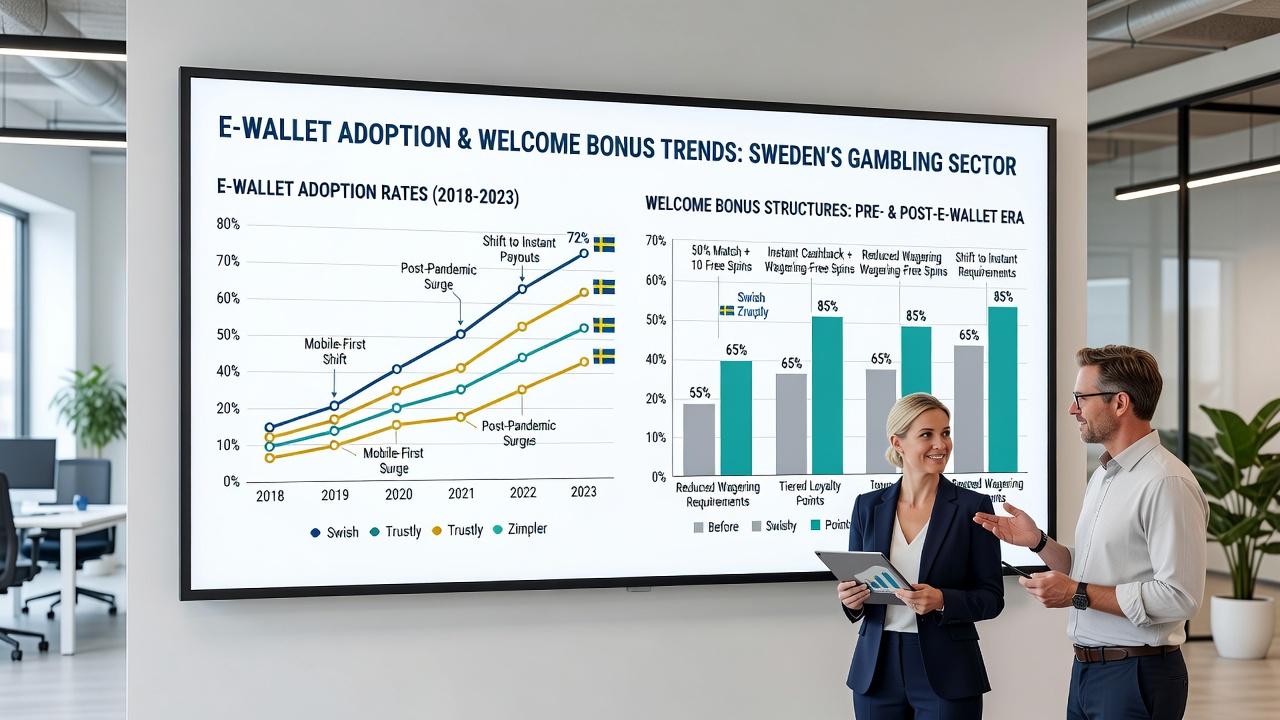
Take one major operator that introduced tiered welcome bonuses in early 2026: the first deposit match rose from 100 percent to 150 percent when the player funded via an approved e-wallet, while the free spin allocation stayed identical. This adjustment reflected observed conversion rates, where e-wallet users showed higher retention after the initial bonus claim. Industry reports note that similar structures now appear across several platforms, each calibrated to the proportion of deposits arriving through digital wallets.
Player Behavior and Market Data
Surveys conducted by European research institutes indicate that Swedish players aged 25–44 adopt e-wallets at the highest rates, and this demographic also claims welcome bonuses more frequently than older cohorts. The preference stems from mobile convenience and the ability to move funds between accounts without leaving the gambling app. As adoption climbs, operators refine bonus triggers so that minimum deposit and maximum bonus cap values align with typical e-wallet transaction sizes reported in market studies.
According to Swedish Gambling Authority statistics, the share of withdrawals processed through e-wallets exceeded 70 percent in the second quarter of 2026. Faster payouts reduce player friction and encourage repeat deposits, which operators factor into bonus budget calculations. One Canadian gaming research group documented parallel patterns in other regulated markets, confirming that e-wallet integration often precedes adjustments to bonus structures.
Future Projections Based on Current Trends
Market forecasts released in mid-2026 project continued growth in e-wallet usage, driven by expanded bank partnerships and new wallet entrants. Operators already testing pilot programs for instant bonus crediting via these channels report elevated claim rates, which may lead to further segmentation of welcome offers by payment type. Data from academic studies on digital payments in gambling contexts supports the view that transaction speed directly influences both bonus uptake and subsequent play patterns.
Conclusion
Sweden's gambling sector continues to document rising e-wallet adoption and corresponding shifts in welcome bonus structures. Payment volume statistics, regulatory filings, and operator reports together illustrate how deposit method preferences reshape minimum thresholds, release timing, and bonus differentiation. These developments remain grounded in measurable transaction data rather than speculation, and ongoing monitoring by the Swedish Gambling Authority ensures that any changes stay within published compliance boundaries.